Case study
ReThink HK 2025
Beyond Carbon: The Water Cycle, Water-Climate Nexus & Hidden Water Footprints
- Event
- ReThink HK 2025 Conference
- Format
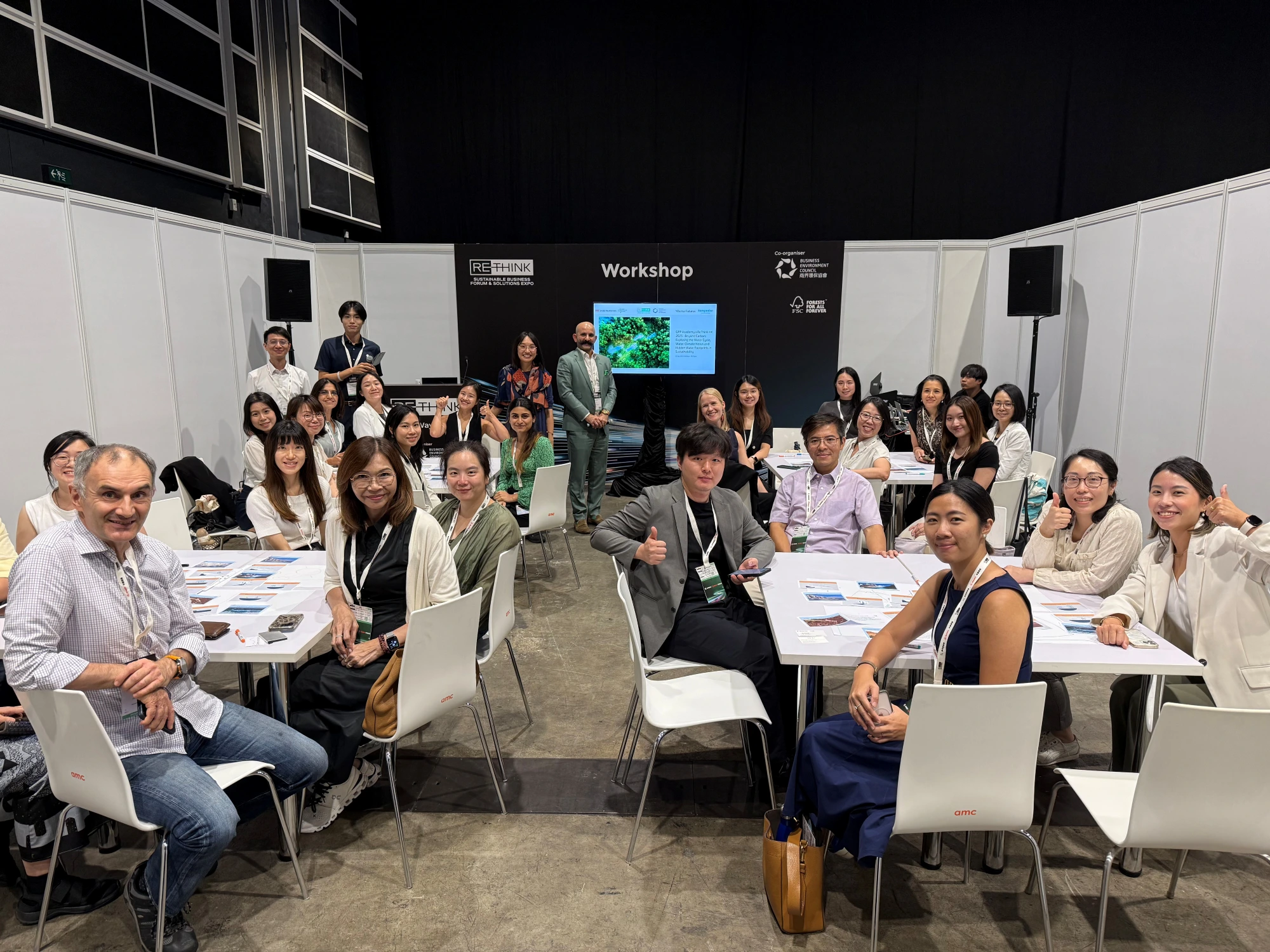
- Interactive workshop — quiz, virtual water discussion, and the Water Cycle Game
- Audience
- 32 participants
- Date
- November 2025
The context
Water is essential to life, yet in sustainability conversations it rarely gets the attention it deserves. The stakes are high: by 2030, global water demand is estimated to outstrip supply by a staggering 40%. At ReThink HK 2025, this often-overlooked resource was brought firmly into the spotlight through a hands-on workshop exploring the water cycle, the water-climate nexus, and the hidden water footprints behind everyday life.
What we did
Led by Joyce Wong, the workshop moved participants from local realities to global systems. It opened with a focus on Hong Kong's unique water landscape. Through an interactive quiz, participants confronted some uncomfortable truths about a system most take for granted — including that water in Hong Kong costs less than half of what it does in Macau, and water tariffs haven't changed since 1995, leaving most Hongkongers unaware of its true cost.
The session then turned to personal impact, encouraging participants to consider the hidden water behind everyday life. Discussion of "virtual water", the invisible water used in the production of goods, was an eye-opener for many. Using beef as a case study, the session illustrated the scale of the issue, highlighting that agriculture alone accounts for the largest share of global water use at 70%, far more than industry (19%) and domestic use (11%).
The highlight
The centrepiece of the workshop was a hands-on activity that brought the science to life. The highlight of the session was the Water Cycle Game — a hands-on activity mapping the journey of water across ecosystems. From ice-capped mountains and flowing rivers to lakes, soil and deep oceans, the game encouraged everyone to visualise the different "stocks" of water and the complex ways it moves through our world. The activity grounded abstract global patterns in local reality — noting, for example, that in Hong Kong, increasing rainfall and more frequent heavy rain days signal a changing climate, underscoring a need to adapt.
The outcome
The workshop succeeded in reframing how participants value a resource they'd long taken for granted. A central takeaway was that the biggest environmental costs often go unnoticed — hidden in the products we buy, the services we use and the systems we overlook. Crucially, the session drove intent to act: participants walked away feeling inspired to act — ready to review their own water footprints and drive conversations on responsible water use within their organisations and with their partners.
Bring a workshop to your school
Tell us about your group and dates — we'll handle the rest.